Glass thickness: a quick guide
Glass shows up almost everywhere in a home or business: cabinet doors, shelves, showers, tables, railings, walls, storefronts and even floors. Each of these jobs calls for a different glass thickness. Below is a quick guide to the most common thicknesses and where each one works best.
Float glass manufacturers make clear glass in a wide range of thicknesses. Pilkington, for example, offers its Optifloat Clear glass in many sizes and thicknesses. We list inches first, with millimetres in brackets. These are the usual trade equivalents, not exact conversions.
Have a glass project in mind?Three easy ways to reach us.We usually reply the same day.
Cabinet doors and small windows: 1/8″ to 5/32″ (3–4 mm)
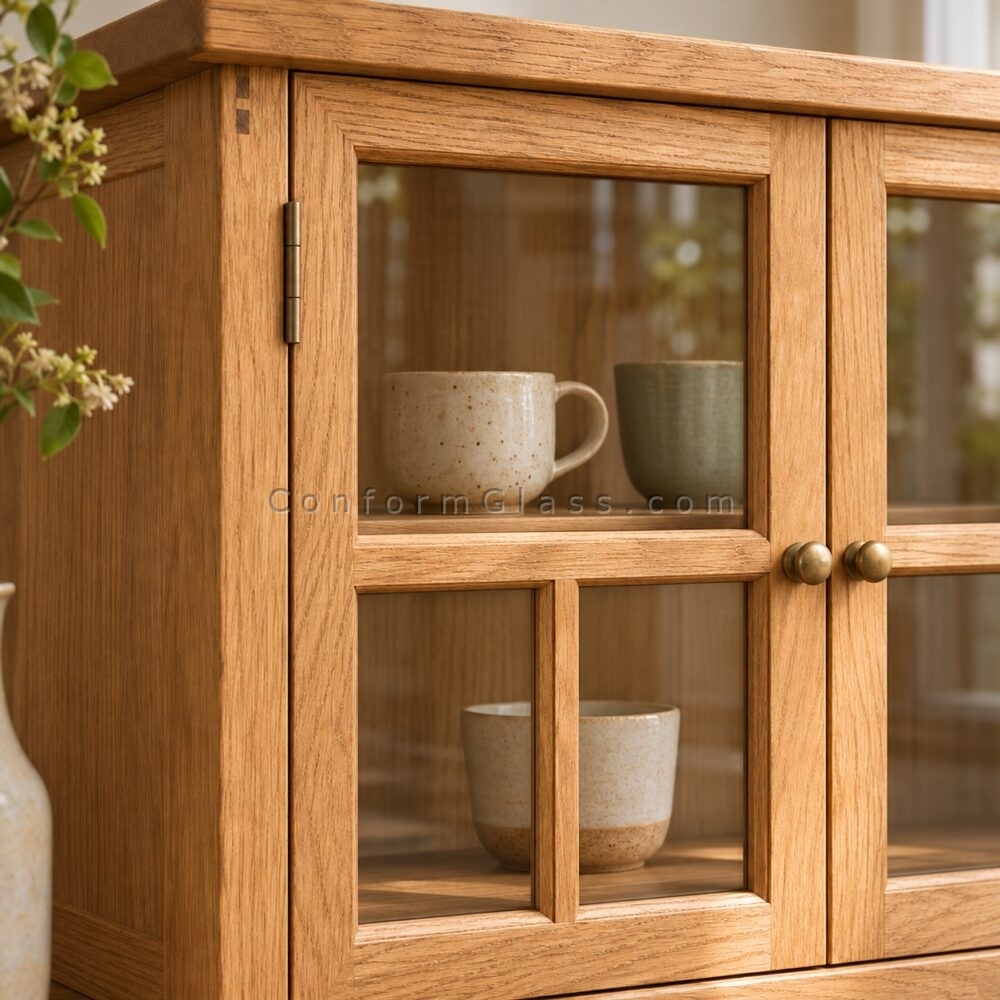
Thin glass works well in small cabinet doors, picture frames and small windows. In these pieces the glass sits in a frame that supports it on all sides.
The glass in cabinet doors is usually installed by the cabinet or kitchen maker while the doors are being built.
Bigger windows and panels usually need thicker glass, so we pick it based on their size and the way they’re built.
Glass shelves: 3/16″ to 1/4″ (5–6 mm)
Tempered glass in this range is a common choice for small shelves in cabinets, display cases and bathrooms. The right thickness depends on how long the shelf is, where the supports are and how much weight it will carry.
Choosing the right brackets matters just as much, and it depends on where the shelf goes. For a floating shelf mounted on a wall, special brackets or clamps hold the glass securely and can even add to the look. Inside a cabinet, small shelf supports are usually enough, and they’re almost invisible.
If you want the shelf to stand out, consider 3/8″ or 1/2″ (10 or 12 mm) glass. A thicker shelf looks more solid and becomes part of the design.
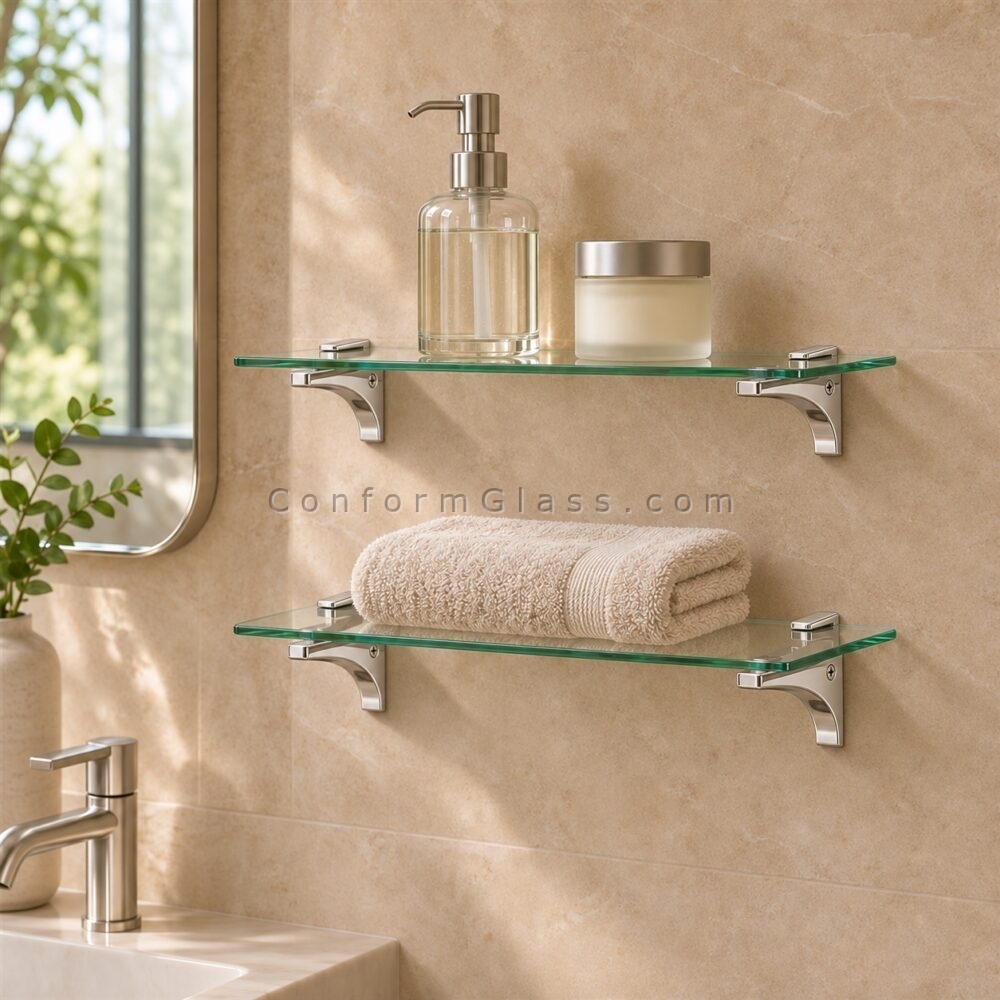
Glass tops for tables and desks: 1/4″ (6 mm)
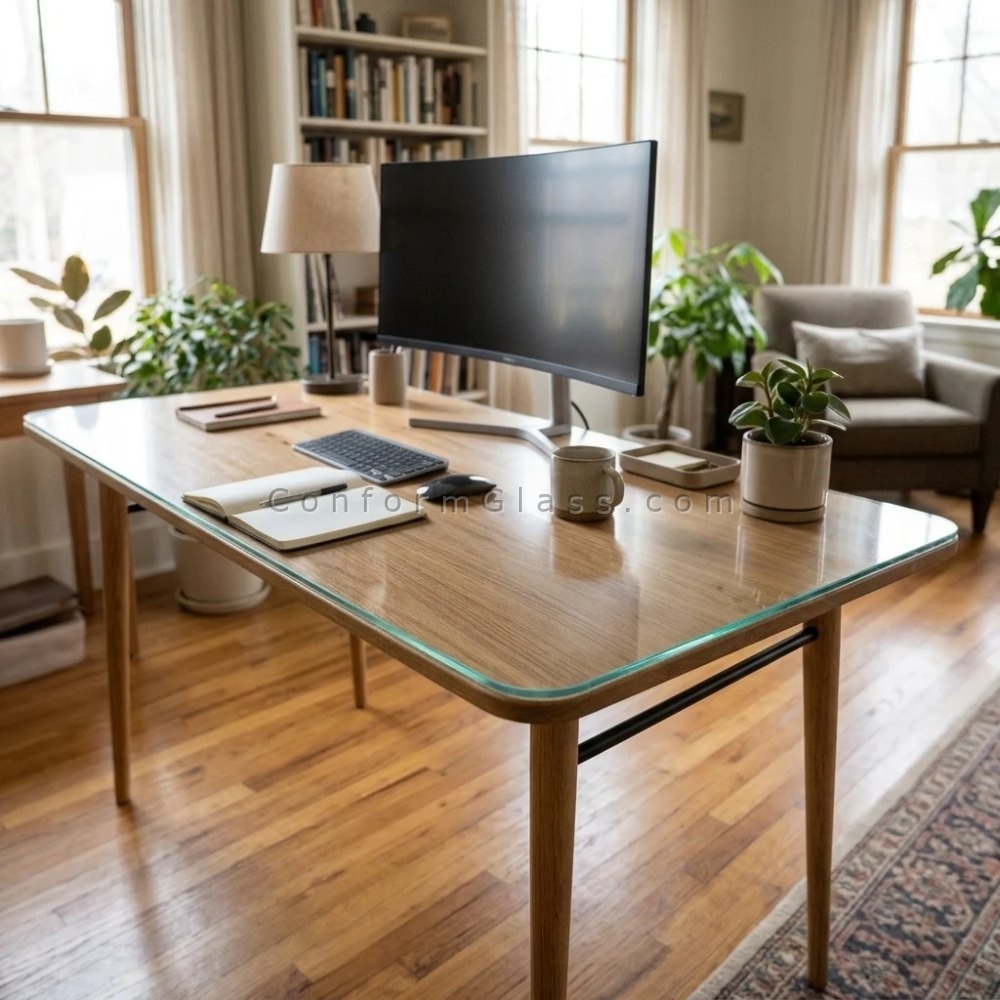
A 1/4″ (6 mm) glass top is the usual choice for protecting an existing table, desk, dresser or work surface from scratches and everyday wear. Here the furniture underneath carries the load, and the glass simply covers it.
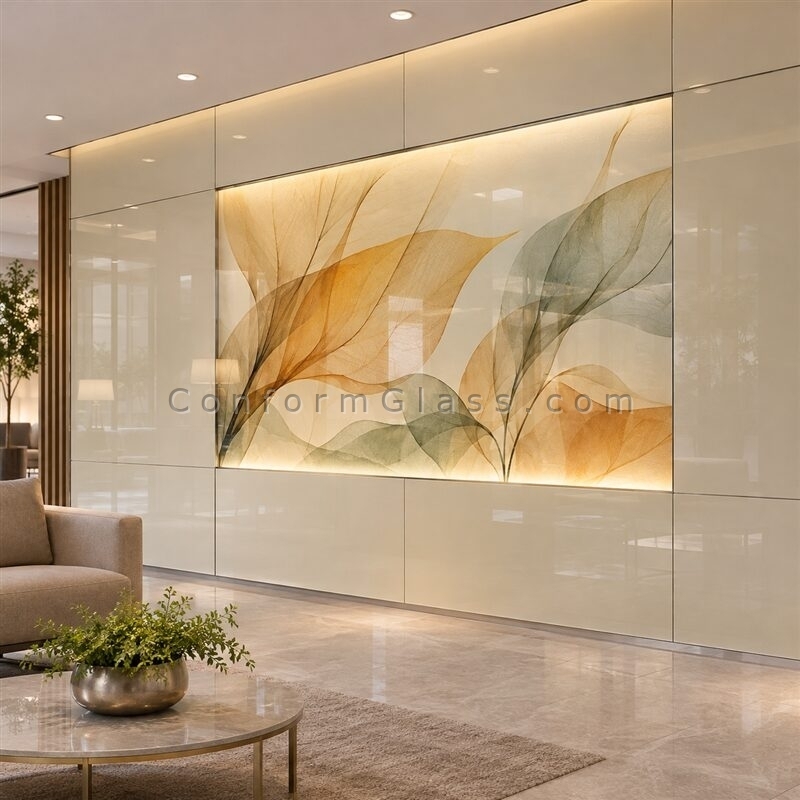
Wall cladding, back-painted and printed glass: 1/4″ (6 mm)
1/4″ glass is also popular for walls, including panels inside elevator cabs. Paint on the back turns it into back-painted glass. We can also print photos, artwork and patterns on the back for feature walls, wall art and premium displays.
Some printed panels are backlit. In that case, we plan the print, the amount of light passing through and the lighting layout together.
For painted and printed panels we usually recommend low-iron glass, because it keeps colours closer to the original. Regular clear glass works too if its slight green tint suits the design.
Shower glass thickness: 3/8″ to 1/2″ (10–12 mm)
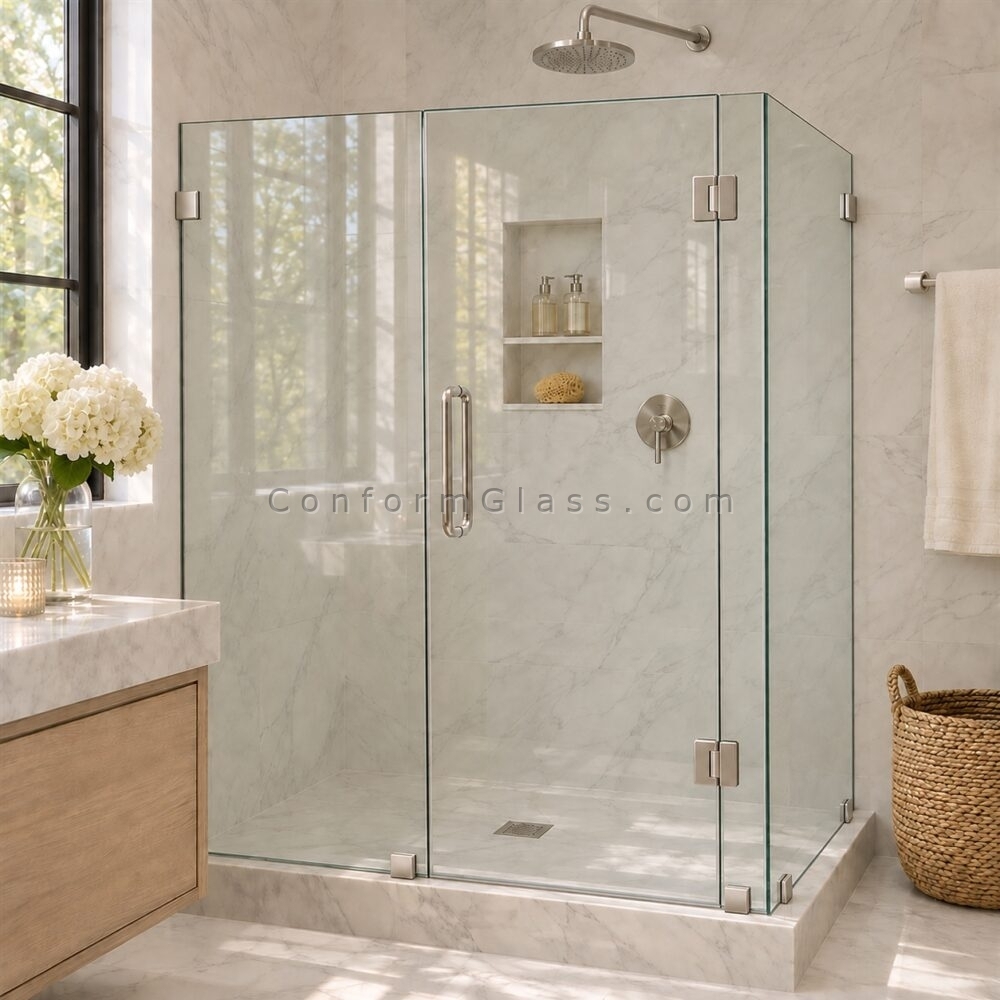
Most custom frameless showers use 3/8″ (10 mm) tempered glass, and 1/2″ (12 mm) is another popular option. Both give a clean, open enclosure with very little visible metal.
Which one to choose depends on the panel sizes, the layout and the hardware. However, some shower systems take thinner glass, so the thickness always has to match the system. See examples of our glass shower enclosures.
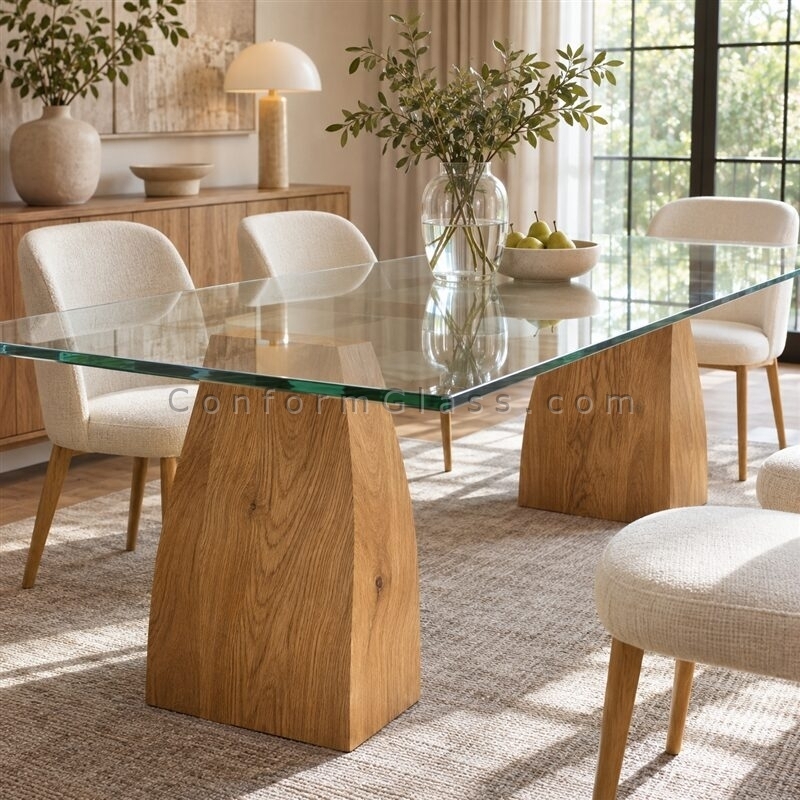
Tabletop glass thickness: from 3/8″ (10 mm)
When the glass is the tabletop itself and sits on legs, a pedestal or a separate base, 3/8″ (10 mm) is usually the starting point. Larger tops may need 1/2″, 5/8″ or 3/4″ (12, 15 or 19 mm) glass.
The farther apart the supports are, the more carefully you need to choose the glass thickness.
Thickness also changes the look. The thicker the glass, the more solid and dramatic your table will look, especially when the top sits on an interesting base or sculptural legs.
Stair railing glass thickness: from 1/2″ (12 mm)
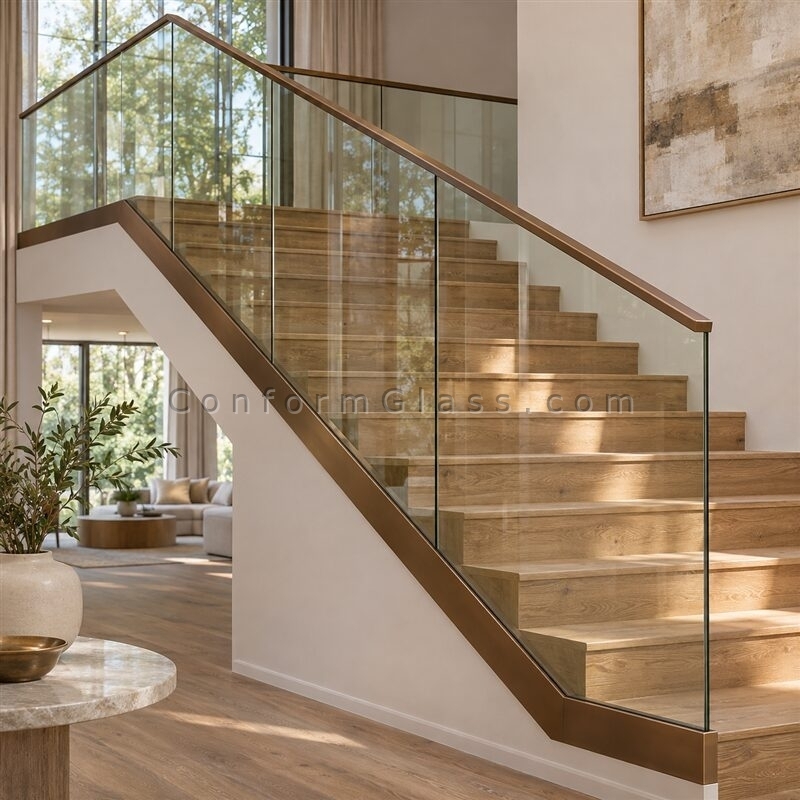
Frameless stair railings usually start at 1/2″ (12 mm) glass. The panels can sit in a base channel or attach with individual fittings, and the right thickness depends on the panel size and the railing system.
Commercial projects often require laminated glass. One example is two 1/4″ (6 mm) sheets bonded with a plastic interlayer: about 1/2″ of glass in total, plus the interlayer.
The project requirements, building codes and the railing system decide whether you need lamination, and in what make-up.
Large tabletops and architectural glass: 5/8″ to 3/4″ (15–19 mm)
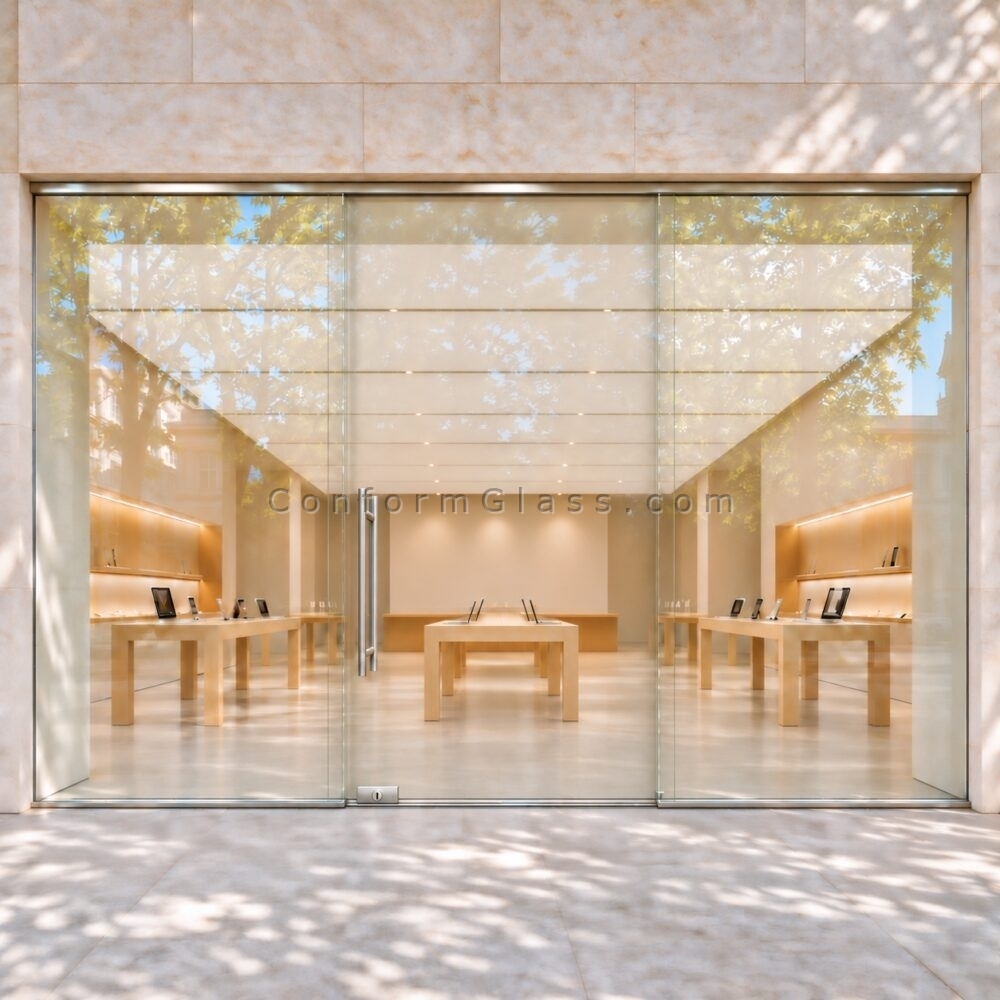
This range suits large tabletops, statement furniture and special architectural features. You’ll also see 3/4″ (19 mm) glass in some commercial partitions, storefronts and glass doors, including in shopping malls.
It looks heavy and solid, and designers often pick it for tall doors and tall glass panels. Still, we choose the thickness and hardware for the real size and design of the installation. A solid look alone doesn’t make it strong.
Glass floor inserts: about 1-1/4″ to 1-1/2″ (32–38 mm) and up
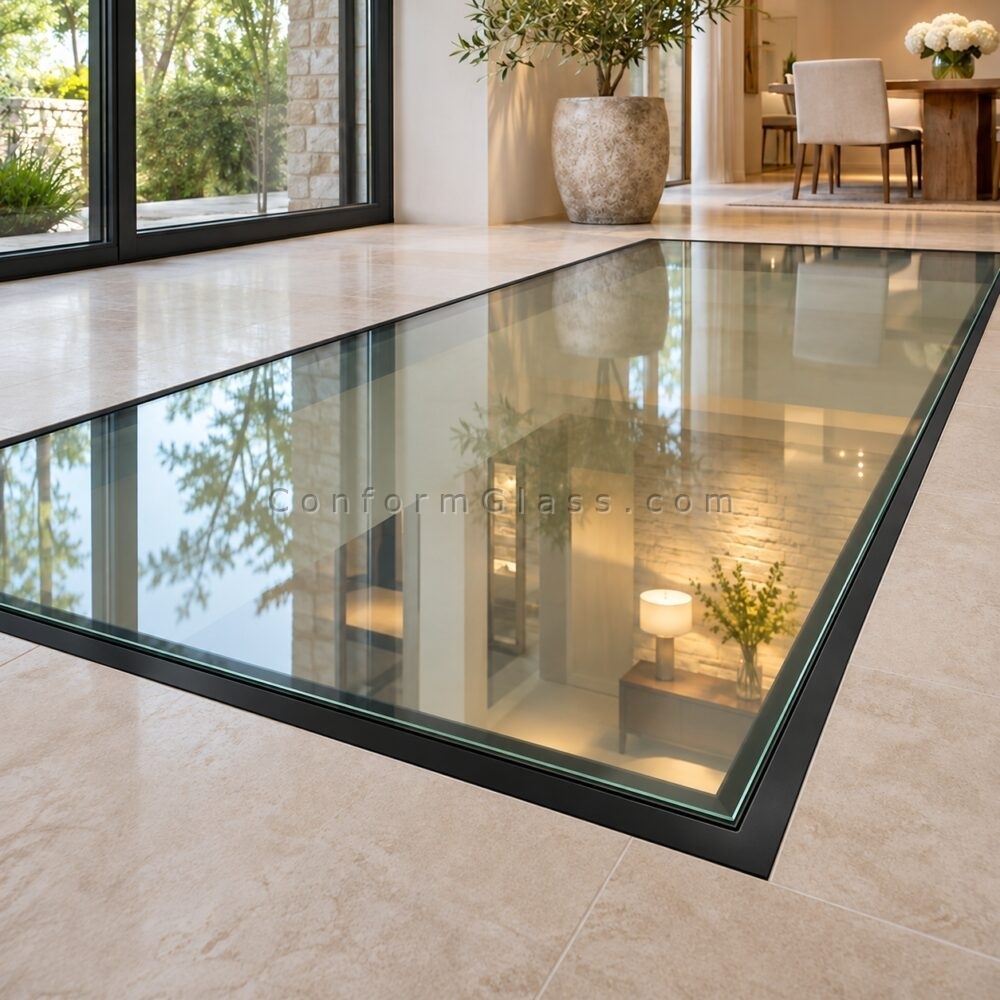
Glass floors use special laminated glass made from several sheets bonded together with strong interlayers. For example, three sheets of 3/8″ to 1/2″ (10–12 mm) glass plus the interlayers can add up to roughly 1-1/4″ to 1-1/2″ (32–38 mm).
The exact make-up depends on the size of the insert, how it’s supported and the loads it has to carry. That’s why a structural engineer must review and approve every glass floor.
How to choose the right glass thickness
Start with three simple questions:
- What is the glass for?
- What are the approximate dimensions?
- What will hold it in place?
At Conform Glass in Toronto, we help choose the glass thickness, type and hardware for each project. Send us photos of the space, approximate dimensions and a short description, and we’ll recommend the right glass and prepare a quote. The examples above are a starting point; the final choice depends on size, support and how the glass will be used.